
Chair no. 10 - Peter Englund
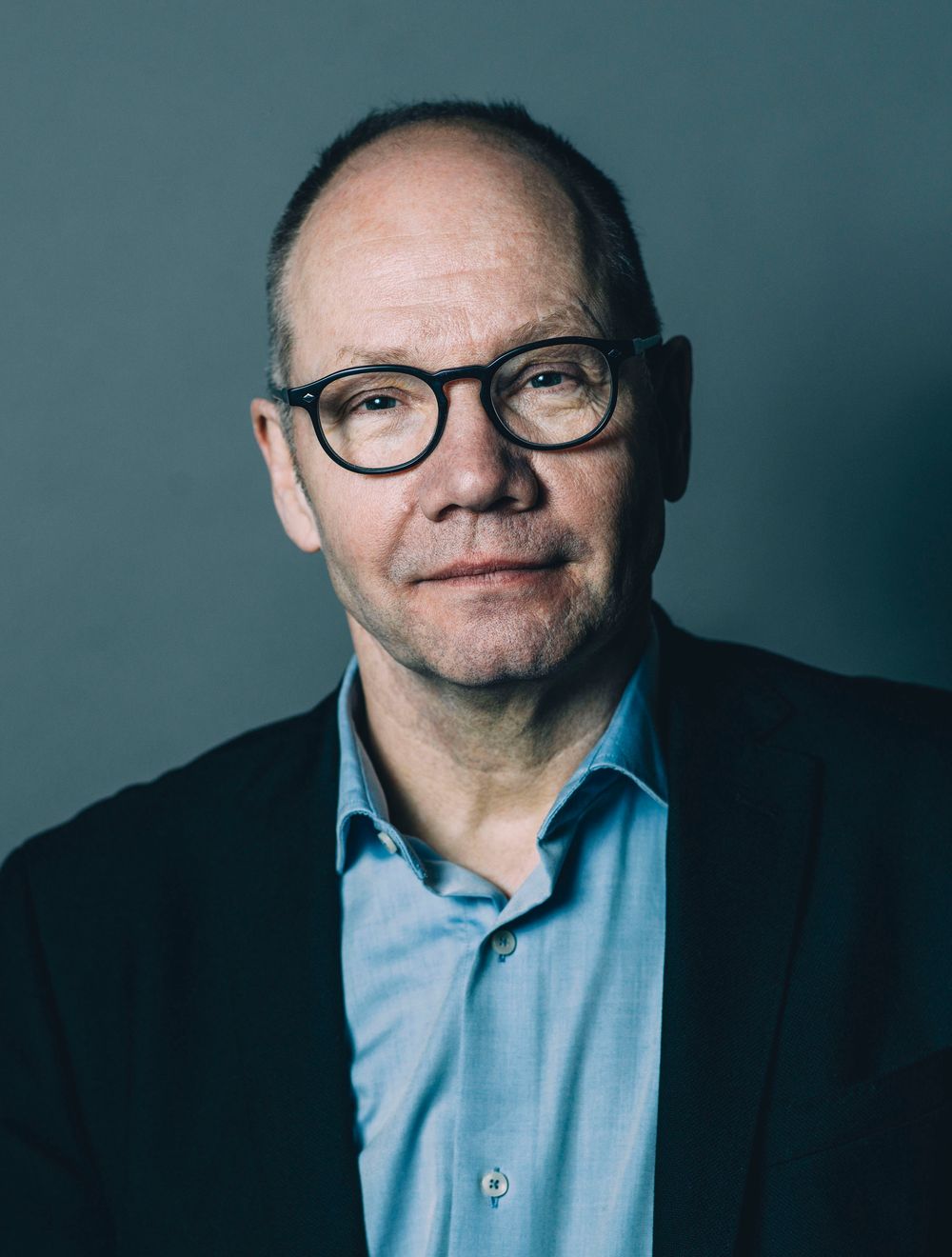 Historian.
Elected: 2002.
Peter Englund’s research and ability to convey his findings have consistently captured the interest of readers – whether in the case of an essay on the origin of the paperclip or a four-volume work on the First World War.
Peter Englund was born in Boden, northern Sweden, in 1957. After graduating and completing his military service, he studied archaeology, theoretical philosophy and history at Uppsala University. He then worked for a period in the military intelligence service, before resuming his academic career and research into how the Swedish Great Power Era was perceived throughout society and the world at large. The result was a doctoral thesis entitled Det hotade huset: adliga föreställningar om samhället under stormaktstiden (A House in Peril: Aristocratic Conceptions of Society during the Swedish Great Power Era, 1989). Alongside this work, he devoted himself to writing about the Battle of Poltava in a freer narrative style, which resulted in the highly acclaimed work Poltava: en berättelse om en armés undergång (1988; The Battle that Shook Europe – Poltava and the Birth of the Russian Empire). The book, with its detailed and anti-heroic depiction of the realities of soldiers’ lives, was not only a bestseller but also boosted the general interest in history in Sweden. Drawing on contemporary sources such as diaries and letters, he memorably describes the catastrophic defeat of the Swedish army in 1709.
In referring to the personal experiences of a number of individuals with regard to a particular historical event, Englund regularly enters the realm of what is known as microhistory, both in the subsequent Stridens skönhet och sorg (1991; The Beauty and the Sorrow, 2008), on the subject of the First World War, and when he later returns to the Swedish Great Power Era in the works Ofredsår (Years of War, 1993), Den oövervinnerlige (The Invincible One, 2000) and Silvermasken (The Silver Mask, 2005). In addition to portraying central but sometimes strangely elusive figures such as Erik Dahlbergh, Charles X and Queen Christina, he also discusses the living conditions of ordinary people, whether in the context of midwifery, dietary customs or the heating of dwellings. This intimate style is often even more evident in his feature and essay collections, including Förflutenhetens landskap (The Landscape of Times Past, 1991) and Tystnadens historia och andra essaer (The History of Silence and Other Essays, 2003). In his latest work, Onda nätters drömmar (2022; November 1942: An Intimate History of the Turning Point of World War II, 2023), he makes use of various witness testimonies in narrating thirty-nine human stories from 1942, at the turning point of World War II.
Englund has also written features about the wars in Croatia, Bosnia, Afghanistan and Iraq, as well as the autobiographical work Jag kommer ihåg (I Remember, 2016) and the forensic examination Söndagsvägen (The Sunday Road, 2020). In addition, he has written on various historical topics for film and television and contributed essays and features to the newspapers Expressen and Dagens Nyheter. From 2001 to 2006, he was Professor of Historical and Social Narrative at the Swedish Institute of Dramatic Art.
Peter Englund was elected to the Academy on 23 May 2002, succeeding Erik Lönnroth on chair number 10, and admitted on 20 December that same year. On 29 May 2008, he was appointed Permanent Secretary, assuming his duties on 1 June 2009 and remaining in the post until 31 May 2015. He was a co-opted member of the Nobel Committee from 2009–15.